What does turning a trial class into a membership depend on?
It depends on the three moments the person meets the studio. If booking is not easy, they never come; if the class does not suit their level, they do not come back; if nobody calls afterwards, the decision is put off and forgotten. Each moment needs someone responsible for it: the page or the front desk for booking, the instructor for the class, a manager for the follow-up.
- Booking: the person can take a seat without waiting or messaging
- The class: a session suited to their level and an instructor who knows someone new is coming
- Follow-up: a call on the day after the class and a concrete package offer
- Someone responsible for each moment: the page or the front desk, the instructor, a manager
How do you set up a trial package?
A trial package is a small package given once to someone new to the studio. Its definition holds how many class credits it gives, how long it is valid, its price and which classes it covers. It can be free or low-priced; what matters is that it gives enough classes to get to know the studio, and that it is clear the next step is a real package.
- Class credits
- Enough classes to get to know the studio; a credit is held at booking and used once attendance is taken or the class takes place, as on any credit package.
- Validity
- The period to use the credits in; keeping it short stops the decision drifting.
- Price
- Free or low-priced. The class value is the price divided by the credits; on a free package it is zero.
- Classes covered
- Classes that suit a newcomer. The trial page only offers sessions of these classes.
- The once rule
- A trial package is given once per person; only the Owner or an Admin can assign a second, with a written reason.
In a free trial class the class value is zero, so an instructor on revenue share earns nothing for that seat; an instructor on a per-class fee or a fixed salary is paid for the class anyway. Either way the cost of the trial class sits with the studio, and what pays for it is the package sold afterwards.
Definition of the term: Trial package
The class value of a trial package: Class Package Price Calculator
How do you make booking a trial class easy?
Booking becomes easy with a page the person can complete on their own without messaging anyone. They pick a suitable session, leave their name, email and phone, confirm with the code sent to their email, and their seat is held. The back-and-forth messages disappear, and the studio finds the booking ready, with a new member and a trial package.
Picks a session
The page shows sessions of the classes the studio chose that suit a newcomer and still have a seat.
Leaves their details
Types their name, email and phone, and accepts the studio's privacy notice.
Enters the code
Confirms the booking by typing the six-digit code sent to their email within ten minutes.
Becomes a member with a seat
Is registered as a member with the trial package and their seat is held; the confirmation email also carries the app invitation.
Because the code goes to the email, no booking is made with a mistyped address, and the studio starts with an email and a phone it can reach for the follow-up. A paid trial class is paid at the studio.
What should you pay attention to in a trial class?
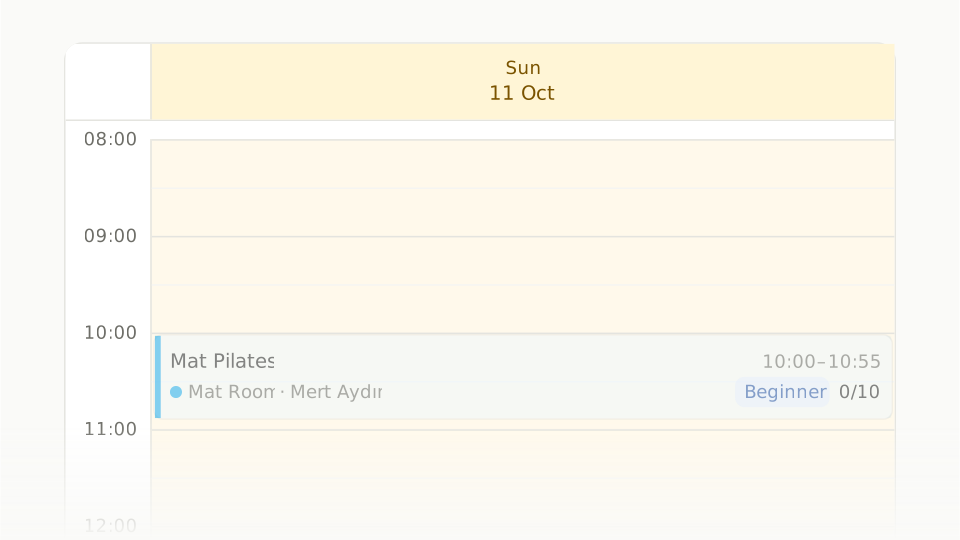
A trial class should be held in a session suited to the person's level, and the instructor should know in advance that someone new is coming. Greeting them a few minutes early, asking about their goal and any health issues, briefly introducing the apparatus and listening to how they felt at the end makes them feel part of the group rather than a customer.
- Put the trial class in an All Levels or Beginner session
- Tell the instructor in advance that someone new is coming
- Greet them a few minutes early and ask about their goal and any health issues
- Briefly explain the apparatus and how the class runs; nobody is expected to get every move right the first time
- Ask how they felt when the class ends, and be ready to talk about the next step there and then
When and how should you call after a trial class?
The best time is the day after the class: the experience is fresh and the decision has not yet been put off. The call is a question, not a sales pitch: how did it go, what did they like, what was hard. Based on the answer, offer the package that fits their weekly frequency and book the next class in the same conversation; call back within a week if they have not decided.
Ask about the experience
Ask how the class went, what they liked and what they found hard; listen to the answer and do not jump to selling.
Suggest a frequency that fits the goal
Work out together how many classes a week suit their goal and their schedule.
Offer the package for that frequency
Name the package that fits the weekly frequency, with what one class costs in it; narrow the choice down to two.
Book the next class
If they have decided, book their first class in the same conversation; if not, say when you will call again and note it.
The follow-up should not be left to memory. Dakik handles it with a notification: on the morning after the class, the team gets a Trial Class Follow-up notification for everyone who came through the trial page and holds no package but the trial, once per person.
Pricing the packages offered after the trial: Pilates Class Pricing
How is the trial conversion rate calculated?
The trial conversion rate is the share of people who attended a trial class and later bought a package: the number who bought divided by the number who attended. For example, if 16 people came to a trial class in a month and 6 of them bought a package, the rate is 37.5 percent. Working it out against bookings too shows whether people are lost between booking and class or between class and package.
- Conversion by attendance = bought a package ÷ attended the trial class
- Conversion by booking = bought a package ÷ booked a trial class
- Show-up rate = attended ÷ booked
- Work the rates out for the same period and the same people: those who booked that month and the packages they later bought
| Month | Booked | Attended | Bought a package | Show-up rate | Conversion by attendance |
|---|---|---|---|---|---|
| Month 1 | 20 | 16 | 6 | 80% | 37.5% |
| Month 2 | 24 | 21 | 9 | 87.5% | About 43% |
The numbers are chosen to show how the rates are worked out; they are not an industry average. In the example both the show-up rate and conversion rose in the second month; had one risen and the other fallen, this is where you would read whether the problem lies between booking and class or between class and package.
What should you do about someone who missed their trial class?
Someone who did not come is not lost; they are stuck between booking and class. Send a short message the same day or the next and offer a new day. Because a no-show uses the trial credit too, a new trial class means a second trial package, so the studio should decide in advance who may give one and on what grounds.
- Message the person who did not come the same day or the next and offer a new day
- A no-show uses the trial credit too, so a new trial class means a second trial package
- Decide in advance who may give a second trial and when
- Count no-shows separately: if the show-up rate is low, the problem is not the class but the time between booking and class
How does the trial class process work in Dakik?
In Dakik a studio gets a public trial class page: the person picks a session, confirms with the code sent to their email and becomes a member with a Trial package. The Owner and Admins receive a New Trial Class notification at booking. On the day after the class, the Owner and Admins receive a Trial Class Follow-up notification for everyone not marked as a no-show who holds no package but the trial.
- The trial class page is switched on or off and tied to the trial package and the classes the studio chooses
- The page offers All Levels and Beginner sessions with a free seat, as many days ahead as chosen
- The booking is confirmed with a code sent to the email; the person becomes a member with a Trial package and a seat
- A New Trial Class notification at booking and a Trial Class Follow-up the day after the class go to the Owner and Admins
- The Overview page shows the month's trial bookings and how many moved on to a package; the member list filters to members who came through a trial
What the packages screen shows: Member Packages
Keeping new members in their first months: Member Retention
Frequently asked questions
Should a trial class be free or paid?
Both work. A free trial makes the decision easy but leaves the cost of the class with the studio; a small fee can make people more committed to turning up. In Dakik a paid trial is paid at the studio and shows as a debt due on the day of the class; a free trial package creates no financial record.
Can the same person be given a second trial package?
A trial package is given once per person, and Dakik refuses a second one. The Owner or an Admin can override the rule, for example to give someone who missed their class a new day; they write a reason, and the action is kept in the audit trail.
Can an existing member book through the trial page?
No. The page is for people the studio does not yet know: someone whose email or phone is already on the member list is asked to contact the studio when they request a code. That way an existing member cannot use the trial terms a second time.
What does a visitor do if the verification code does not arrive?
The code has six digits and is valid for ten minutes. If it does not arrive, the visitor can ask for a new one after a minute; checking the spam folder first often solves it. Nothing is booked until the code is confirmed, so an abandoned attempt never holds a seat.
Which sessions does the trial page show?
Sessions of the classes the studio chose, at All Levels or Beginner level, with a seat free. The studio chooses how many days ahead the page looks, between 1 and 60. If the trial package's scope is narrowed or the package is deactivated, the page follows.